


Car accidents rarely come down to one single cause and a thing going wrong. Usually it’s a mix: someone glances at their phone for two seconds, the car ahead brakes hard in heavy traffic, and there isn’t enough room to stop. That’s why we get so many calls from people who are still trying to piece together what actually happened to them.
We’re Jason Stone Injury Lawyers, and we’ve spent years helping people across Massachusetts, from Boston to Natick, Fall River, Peabody, Plymouth, and Norwood, sort through exactly that question. Knowing what typically causes crashes here doesn’t just satisfy curiosity. It often points straight at who was negligent, which matters a lot when you’re trying to recover for what happened to you
What Actually Causes Car Accidents in Massachusetts
A few causes show up again and again in Massachusetts crash data and in the cases we handle.
Distracted Driving
Taking your eyes off the road, even for a moment, changes everything. Massachusetts law backs this up directly: under M.G.L. c. 90, § 13B, drivers can’t hold a mobile electronic device at all while driving, and can only use one hands-free. Reading a text, scrolling a map that isn’t properly mounted, or holding a phone to talk are all violations. Here’s what’s interesting, though. MassDOT’s own distraction data for 2022–2026 tells a broader story than “everyone’s on their phone.” Looking at Massachusetts crash records from 2022 through 2026, the single largest distraction category most years wasn’t phone use at all. It was what MassDOT classifies as “other activity,” things like searching for something in the car, eating, or personal grooming. In 2022 alone, that category accounted for 4,085 reported crashes; more than manually operating a device caused 1,277 crashes, talking hands-free resulted in 109, and talking hand-held in 126 crashes combined. External distractions, meaning something outside the vehicle pulling a driver’s attention away, ran a close second most years.
Driving Under the Influence
Alcohol impairs drivers’ reaction times behind the wheel, making accidents more likely. Massachusetts takes it seriously under the OUI statute, M.G.L. c. 90, § 24. About 1 in 3 traffic deaths in Massachusetts involved a drunk driver in 2023.
Speeding
Massachusetts doesn’t define safe speed as just a number on a sign. The actual legal standard, M.G.L. c. 90, § 17, is that no one may drive faster than what’s “reasonable and proper” for the conditions. Posted limits create a presumption, not an automatic pass or fail. Speeding eats into the time and distance a driver needs to react and stop, which is a big reason it’s so tightly linked to crashes.
Fatigued Driving
Drowsy driving slows reaction time in ways that can look a lot like impaired driving, without a drop of alcohol involved.
Driverless Cars and Driver-Assist Technology
Though not a big issue at the moment, as only a handful of accidents have happened involving driverless cars, this problem will only grow as more and more car manufacturers are developing self-driving vehicles.
Heavy traffic on busy arterials and at intersections
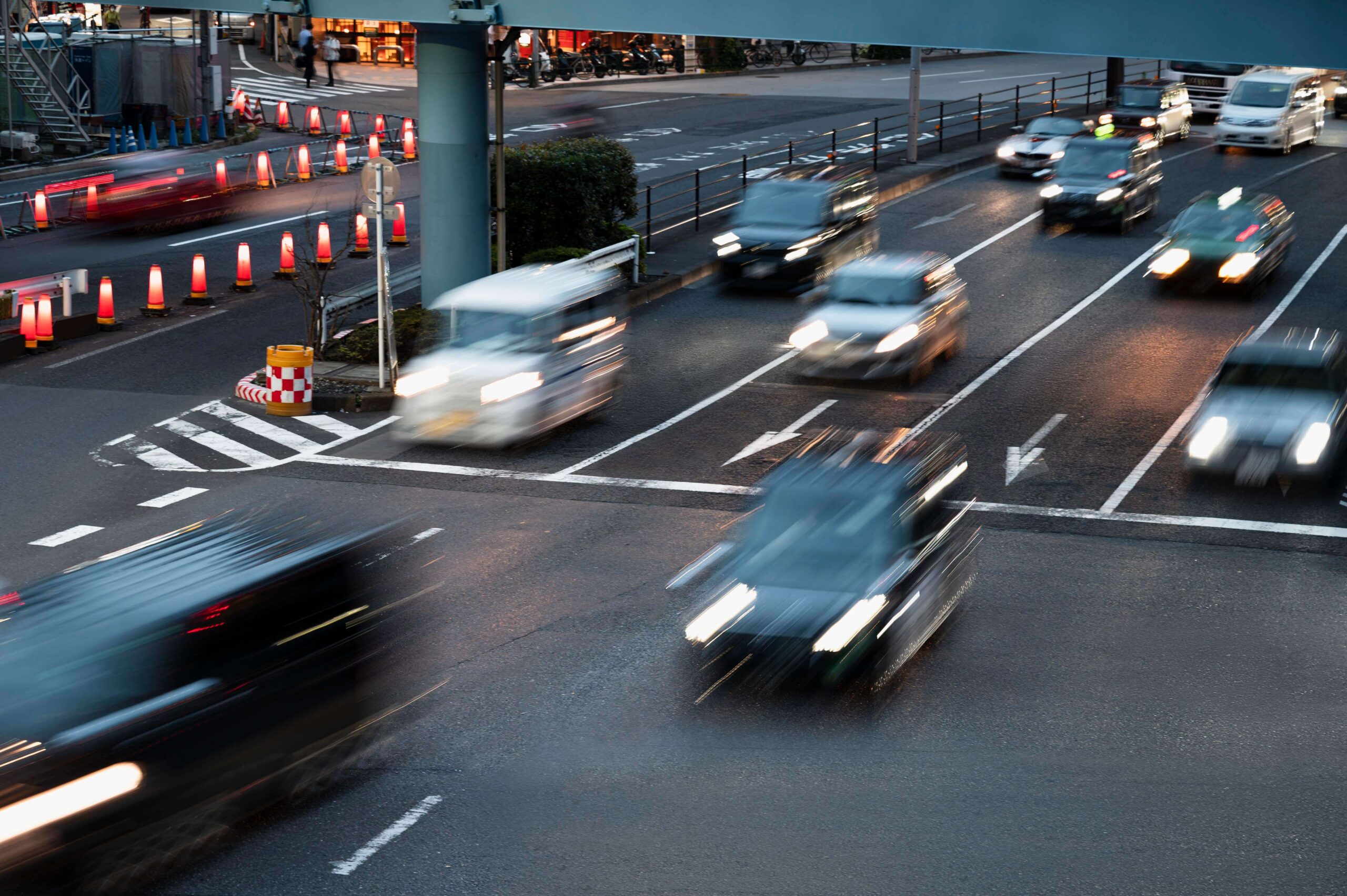
It’s easy to assume the worst crashes happen at highway speed, but MassDOT’s 2025 data tells a different story. Of the roughly 122,431 crashes recorded statewide that year, over 95% happened on urban roads rather than rural ones (117,159 versus 3,018), and the roads carrying the most crashes weren’t interstates at all. Principal arterials (major through-roads like Massachusetts Ave or Route 9) accounted for 39,333 crashes and minor arterials another 33,122, compared to 11,632 on interstates. Busy arterials and local streets bring together heavy stop-and-go traffic, frequent intersections, drivers turning across lanes, and pedestrians and cyclists sharing the same space. All of that raises the odds that a moment of distraction, an unsafe following distance, or someone rolling through a yellow light turns into a crash, often a rear-end collision.

Seasonal and weather-related driving conditions
The time of year is a cause of crashes in its own right, not just a backdrop. Massachusetts State Police crash reports from 2025 show a real seasonal swing, with reports peaking in
- October – 2,231 crahes
- December – 2,105 crashes
- November – 2,022 crashes
- and May – 2,007 crashes
- and dropping to their lowest in March – 1,397 accidents.
Shorter daylight hours, wet leaves and early ice, holiday travel, and drivers who haven’t adjusted to darker evening commutes all show up in that pattern. We regularly see crashes in late fall and winter that trace back to a driver who didn’t slow down or leave extra room once the conditions changed, even when they were still under the posted speed limit.
What This Means for Your Claim
Massachusetts follows a modified comparative negligence rule. In plain terms, you can still recover damages even if you bore some responsibility for the crash, as long as your share of fault isn’t greater than the other driver’s. If you were found 20% at fault, for example, your recovery would be reduced by that percentage, not eliminated. A traffic law violation, like speeding or an illegal turn, counts as evidence a jury can weigh on the question of fault. It isn’t automatic proof by itself, which is exactly why identifying the real cause of a crash matters so much to how a claim gets built.
Massachusetts also runs on a no-fault insurance system for initial medical costs. Your own auto insurance’s personal injury protection (PIP) coverage typically pays your medical bills first, regardless of who caused the crash. Whether you can go beyond that and pursue a claim against the at-fault driver depends on the nature and severity of your injuries. Every case is different, so this isn’t something we’d want to predict without knowing the specifics of what happened to you.
Get Help Now
The longer you wait after a crash, the harder some evidence becomes to pin down. Traffic camera footage gets overwritten, skid marks fade, and witnesses’ memories get less sharp. If you were hurt and you’re not sure what caused the crash, or you have a theory but need someone to dig into it, give us a call. We investigate the cause, work with accident reconstruction experts when a case calls for it, and build your claim around what actually happened, not guesswork. Call us at (888) 619-1721 or fill out our free contact form. Our phones are answered 24/7, and we’ll call you back within 24 hours or lunch is on Jason.
Not Trusting What You’re Being Told?
Better Phone Stone
(800) 577-5188
 START MY NO OBLIGATION CONSULTATION