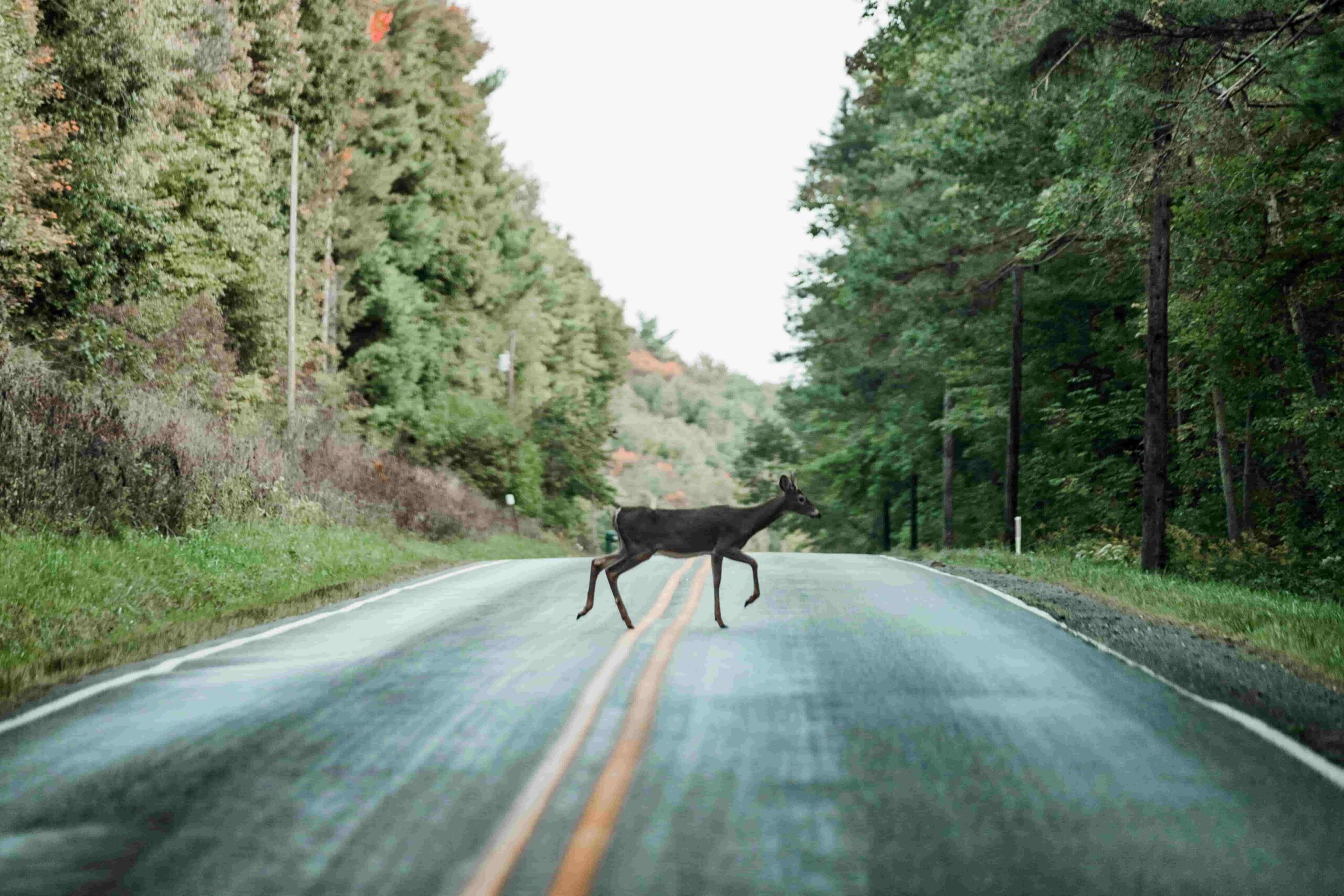






It happens in a split second. A deer comes out of the dark, you hear the thud, and you’re sitting on the shoulder with your hands shaking and a dozen questions running through your head. Is this my fault? Who do I call? Will my insurance go up? We hear these questions every fall, so let’s walk through what Massachusetts law actually says, starting with why so many drivers end up in this spot right now.
Why Deer Crashes Spike in Massachusetts From October to December
If it feels like there are deer everywhere right now, you’re right. MassDOT data shows that 25% of reported deer collisions from 2018 to 2022 happened in November, and nearly half happened between October and December.
The main reason is the breeding season. The peak rut runs from November 6 to 20, when deer “move a lot” and are “more distracted”. There are also more of them. Hunters took a record 16,681 deer last season, and parts of eastern Massachusetts can have 30 to 50 deer per square mile.
The South Coast and South Shore feel it most. In late 2022, Plymouth and Bristol counties led the state, and Middleboro, Taunton, Westport, Swansea and Rehoboth topped the town list. Then the clocks fall back, and the deer crash peak shifts to 5 to 7 p.m., right on top of your drive home.
So when a deer steps out in front of you, what should you do?

You See a Deer in the Road. Should You Brake or Swerve?
Brake, and stay in your lane. MassWildlife puts it plainly: “Do not swerve to avoid hitting a deer because it may lead to more risk and damage than hitting the deer”.
A few habits can buy you time:
- Slow down on dark, curvy roads at dusk.
- Use your high beams when there’s no oncoming traffic.
- Tap your horn if you spot a deer early (AAA via CBS Boston).
- Expect a second deer. “Where there is one, there may be many” (AAA Northeast).
Sometimes, though, there’s simply no time to react. If the deer still ends up on your hood, here’s what to do next.
What to Do Right After You Hit a Deer in Massachusetts
The first few minutes are a blur. Take a breath, then go through these steps.
- Get Safe
Pull onto the shoulder or into a parking lot if your car still moves, and turn on your hazards. On a busy highway like Route 24 or I-495, stay in the car with your seatbelt on. Many people get hurt a second time when they step out into traffic. - Check Everyone for Injuries
Ask everyone how they feel and look for cuts, head bumps, and neck or back pain. Take any complaint seriously. - Call for Help
911 if anyone is hurt, the road is blocked or your car is stuck somewhere dangerous.
Environmental Police at 1-800-632-8075. MassWildlife says deer and moose collisions should be reported to them.
Local or State Police for a crash report. Ask for the report number before the officer leaves.
A tow truck if your car isn’t safe to drive. Not sure who to call? Call 911 and let the dispatcher route you. - Stay Away From the Deer
An injured deer is scared, strong, and can kick hard. Don’t try to help it or drag it off the road. Let the police handle it. - Take Photos Before You Wash Anything
Photograph the damage from every side, the scene, and the deer if you can do it safely. Get close-ups of any deer hair stuck in the grille or bumper. Drivers often say that fur is what settled any question with their adjuster, so skip the car wash until your insurer sees the damage. - Call Your Insurer
Report the crash as soon as you can. Stick to what you know. If you’re unsure about your speed or distances, say so instead of guessing.
What If the Deer Ran Away?
Deer often take a hit, get up, and run into the woods. Your damage and your claim are still real, and your photos and the deer hair matter even more now. If the deer looked badly hurt, tell the police or Environmental Police where it happened.
What If You Panicked and Drove Off?
It happens. It’s dark, your phone is dying, and you just want to get home. Once you’re safe, call the local police non-emergency line, take photos before cleaning the car, and call your insurer to explain what happened.
Whether you stayed at the scene or made it home first, you may be wondering what the law actually requires of you.
Do You Have to Report Hitting a Deer in Massachusetts?
Let’s clear up the biggest worry first. Accidentally hitting a deer isn’t a crime. Deer step into traffic, and careful drivers can’t always stop in time.
The law does ask one thing of you. If anyone was injured, or there’s more than $1,000 in damage to any one vehicle or other property, you must file a written crash report within five days. A cracked grille, a broken headlight, and a dented hood can pass that number fast. If you’re not sure, file the report anyway.
Once the paperwork is handled, the next question is usually the one that keeps people up at night: will this count against me?
Is Hitting a Deer an At-Fault Accident in Massachusetts?
In most cases, no. A deer that jumps in front of your car is something you couldn’t control, and insurers generally treat it that way.
It comes down to how the claim is classified. Massachusetts surcharges drivers for at-fault accidents, meaning the driver was more than 50% at fault and the claim paid more than $1,000. That rule only applies to certain coverages: damage to someone else’s property, collision and limited collision (Mass.gov, SDIP). Deer damage usually falls under comprehensive, so it typically shows up on your record as a claim, which insurers treat very differently from an at-fault accident.
That covers your record. Your car is the next thing on your mind.
What Insurance Pays for It?
Even a “small” deer hit can do more damage than people expect. As we’ve mentioned, hitting a deer usually falls under comprehensive coverage. The Massachusetts Division of Insurance says comprehensive pays for damage “caused by events other than a collision,” including “contact with animals”.
Collisions are different. It pays when your car hits another object, “such as another vehicle, a guard rail, or a wall”. That’s usually the coverage that applies if you swerve and hit something else.
But here’s the catch. Both coverages are optional in Massachusetts. If you don’t carry the one that applies, you may end up paying for repairs yourself, so check your policy before deer season peaks.
However, once you swerve, or another driver gets involved, the picture can change fast.
When Fault Can Shift: Swerving and Secondary Crashes
A deer crash can quickly pull in a tree, a guardrail, or another driver. When that happens, who’s at fault can change.
You Swerve and Hit a Tree, Pole, or Guardrail
You miss the deer but hit something else. Now the claim usually moves to collision, and when yours is the only car involved, insurers start by assuming you were mostly at fault (211 CMR 74.04(19)). You can push back with evidence, but that’s where they begin.
You may have heard that “insurance won’t cover it if you go off the road.” That’s a myth. If you have collision coverage, it may pay. It just may count against your record, which is one more reason not to swerve.
You Swerve Into Another Car
If you dodge a deer and cross into another lane, insurers usually presume you’re at fault. The other driver may bring a claim against you for their damage and injuries. Blame can be shared, but your share lowers what you can recover. The deer explains why you swerved. It doesn’t automatically clear you.
Another Driver Reacts to a Deer and Hits You
Sometimes you do everything right and still get hurt because of how someone else reacted. For example:
- The car behind you rear-ends you when you brake for a deer.
- An oncoming driver swerves around a deer and into your lane.
- Someone hits you while you’re stopped on the shoulder with your hazards on.
- A driver dodges a deer and runs you off the road without ever touching your car.
In cases like these, the other driver’s insurance may be responsible. Get their plate number, insurance info, and any witness names you can.
What Can Affect Fault
Every crash is different, but insurers often look at:
- Speed. Driving at the speed limit can still be too fast on a dark, curvy road.
- Following distance. Tailgating leaves no room to stop.
- Distraction. Phones and other distractions eat up reaction time.
- Visibility. Darkness, fog, glare, and roadside brush matter.
- Warning signs. A deer crossing sign may raise the question of whether a driver should have slowed down.
- Evidence. Photos, dashcam video, the police report, and witnesses often settle the close calls.
Even with good evidence, insurers don’t always get it right. If you think yours didn’t, you have a way to push back.
Will Your Insurance Go Up?
It may not, but we can’t promise that. Comprehensive isn’t one of the coverages that trigger an at-fault surcharge. Still, insurers aren’t required to use the state’s Safe Driver Insurance Plan, and some use their own rating rules (Mass.gov, SDIP). If you’re worried, ask your agent directly.
Car repairs and insurance headaches are stressful. But when someone gets hurt in a deer crash, the stakes are much higher.
What to Do If You or a Passenger Were Hurt
A deer coming through the windshield, an airbag going off or a hard stop can cause concussions, whiplash, and broken bones. Since some symptoms show up later, get checked even if you feel okay. Your PIP coverage pays up to $8,000 per person in medical bills and some lost wages, no matter who caused the crash, and that includes your passengers (M.G.L. c. 90, §34A).
Whether your claim is about the car, an injury, or both, a few deadlines start the day of the crash.
Deadlines to Know After a Deer Collision
- Right away. tell your insurer. Waiting too long can complicate your claim.
- 5 days. file a crash report if anyone was hurt or damage is over $1,000 (M.G.L. c. 90, §26).
- 30 days. appeal an at-fault finding you disagree with (Mass.gov).
- 3 years. the general deadline for most injury lawsuits (M.G.L. c. 260, §2A). Evidence fades much sooner, so don’t wait.
Deer season in Massachusetts is short, but it hits hard, especially on dark November commutes. If you do hit a deer, get safe, take your photos, and report it. Most deer crashes end with a comprehensive claim and a trip to the body shop. Things only get complicated when you swerve, another driver gets involved, or someone gets hurt.
We’ll be honest with you. If only your car was damaged, you probably don’t need a lawyer. Your own insurer can usually handle that claim.
It’s different when someone gets hurt, another driver was involved, or your insurer marked you at fault unfairly. In those cases, we can help you sort out your PIP benefits, look at who may be responsible, and deal with the insurance companies while you recover.
Our Stone Cold Guarantee is about how we treat you:
- A free consultation, with no obligation
- A response to your call within 24 hours
- A representative available 24/7
- Case updates every two weeks while you recover
We have offices in Boston, Fall River, Natick, Norwood, Peabody, and Plymouth, so we know Massachusetts roads well. Call us or reach out online to talk through what happened.
Not Trusting What You’re Being Told?
Better Phone Stone
(800) 577-5188
 START MY NO OBLIGATION CONSULTATION